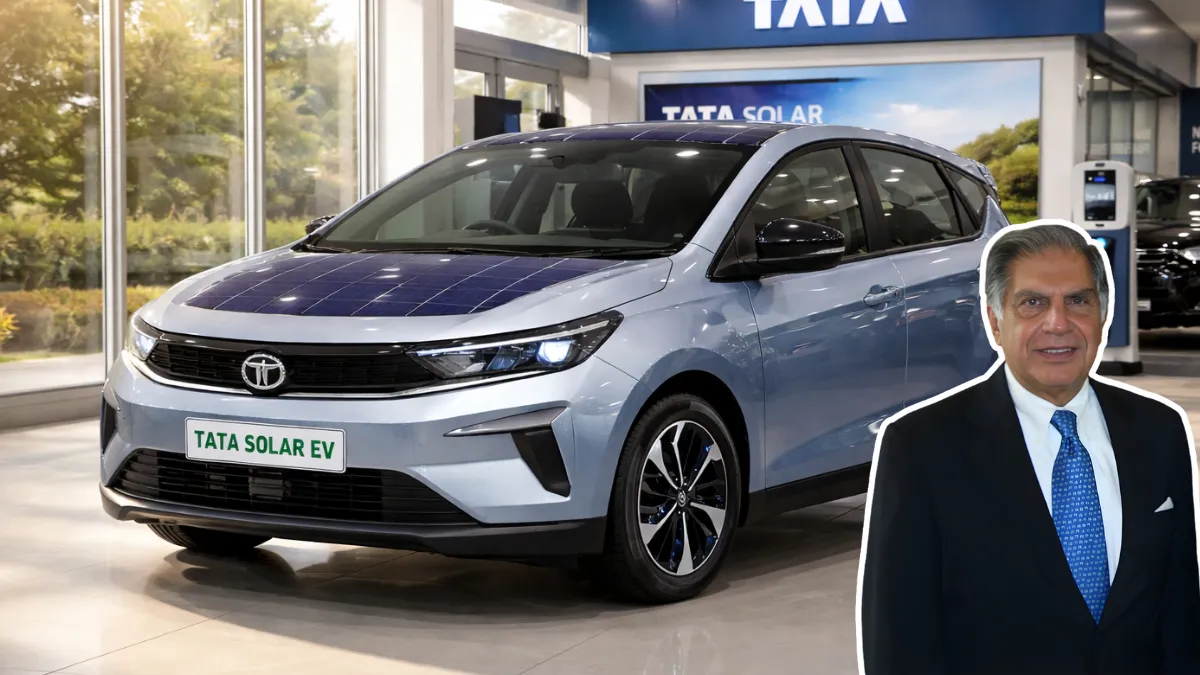
Tata Solar Electric Car Launched: The internet is buzzing with claims that a Tata solar electric car has been launched at an unbelievable price of just ₹70,000. According to viral posts, this ultra-cheap car promises a massive 500 km driving range and a top speed of 100 km/h. For a country where affordable mobility is a dream for millions, the story spread like wildfire. But behind the excitement lies a crucial question that every reader deserves answered clearly and honestly.
The Claim That Shocked Everyone
Social media platforms are flooded with videos and posts confidently stating that Tata has already launched a solar-powered electric car cheaper than the legendary Tata Nano. The combination of solar technology, long range, and an ultra-low price instantly grabbed attention. Many viewers assumed this was an official launch because the information was shared with professional thumbnails, confident voiceovers, and bold headlines that left little room for doubt.
Why This Sounds So Believable
India has seen rapid growth in electric vehicles over the past few years. Budget EV scooters, compact electric cars, and strong government support have reshaped public expectations. Tata’s reputation for building affordable and reliable vehicles adds another layer of trust. When people see the Tata name attached to innovation and low pricing, they naturally feel the news could be real, even without official confirmation.
What Tata Has Actually Announced
Tata Motors has made no official announcement about launching a solar electric car priced at ₹70,000. There has been no press release, no regulatory filing, and no dealer-level communication confirming such a product. As of now, the company’s electric lineup focuses on proven models like the Tiago EV and Nexon EV, which follow realistic pricing and performance standards.
Understanding Solar Car Reality
Solar panels on cars are still an emerging concept worldwide. In real-world use, they act as supporting technology rather than the main power source. Even advanced global prototypes only gain limited extra range from solar charging. Achieving a full 500 km range mainly through solar energy, especially in a low-cost vehicle, is beyond current mass-market technology and infrastructure capabilities.
The Price Problem Nobody Mentions
A ₹70,000 price tag sounds revolutionary, but it ignores basic manufacturing economics. An electric car battery alone costs more than that amount. Add safety systems, motor, electronics, body structure, and compliance costs, and the number increases dramatically. Even the Tata Nano, once known as the world’s cheapest car, launched at a significantly higher price and still struggled with profitability.
Speed Claims Raise Red Flags
The viral claim of a 100 km/h top speed brings serious safety and certification concerns. Any car sold in India must pass strict crash tests and meet regulatory standards. Developing and certifying a vehicle capable of such speed requires years of testing and heavy investment. No established manufacturer would bypass these steps, especially one with Tata’s reputation for safety and reliability.
How Such Rumors Go Viral
Auto-related misinformation spreads fast because it blends hope, affordability, and national pride. Content creators often exaggerate early concepts, design renders, or student projects and present them as finished commercial products. Algorithms reward sensational headlines, not accuracy, which is why such stories dominate feeds before facts can catch up.
What Tata Is Likely Working On
Instead of miracle launches, Tata’s real strategy focuses on gradually reducing EV costs, improving battery localization, and expanding charging infrastructure. Future entry-level electric cars may become more affordable, but they will still follow realistic pricing and performance benchmarks. Solar features, if introduced, are more likely to assist efficiency rather than replace traditional charging.
What Consumers Should Keep In Mind
Readers should always rely on official company statements and trusted automotive news sources before believing or sharing such claims. Viral videos and posts do not equal confirmation. Staying informed helps avoid scams, fake booking links, and unrealistic expectations that often surround trending auto rumors.
Final Word: Tata Solar Electric Car Launched
The idea of a Tata solar electric car cheaper than the Tata Nano is exciting but not real at this point. There is no official confirmation, and the technical and economic challenges make such claims unrealistic today. Tata is genuinely shaping India’s electric future, but this viral story appears to be hype rather than a historic launch. The real EV revolution is coming step by step, not through overnight miracles.
